Drawings are all around us: drawings are the red-and-yellow faded cave paintings of angry bulls, herds of wild elephants, and determined hunters; drawings are the shapes and forms thick oil paints and chalky pastels give birth to on the daunting white canvas; drawings are the small “mindless” doodles that reside in the margins of a bored student’s school notebook; drawings are the colorful, and sometimes rebellious, graffiti that decorates the bleak and ash-gray concrete cities. Drawing is a mental walk mapped out on a cave wall, on a piece of paper, or on the side of a building for others to see, to enjoy, to marvel, to wonder, and to become inspired to take a mental walk of their own. Just like the complex English language or even the beautiful language of music, drawing is a language in itself. It is a form of communication and self-expression which dates back 32, 000 years with the first cave paintings.

The cavemen of the Paleolithic era walked many miles in their lifetime. Research suggests these prehistoric people traveled from place to place following herds of wild animals they hunted for food and other uses. With no means of verbal communication, scientists suggest the people used drawings as a way to communicate or document their experiences and their knowledge. Some researchers suggest cave drawings have a religious, ceremonial, or spiritual purpose. David Lewis-Williams, a specialist in the Bushmen culture, theorizes that “a shaman amongst the people would retreat into the darkness of the caves, enter into a trance state and then paint images of their visions, perhaps with some notion of drawing power out of the cave walls themselves.” The drawings these people left behind give us an insight into their culture, their beliefs, and their way of life we would never have known otherwise.
I can’t tell you how long I’ve spent staring at a blank page in my abused sketchbook waiting for an image to come to the forefront of my mind. Some days I have creativity coursing through me, other days my mental walk has come to a complete stop. On days that I have images running through my mind, I sit down and channel all the creativity I have to my hand, to the pencil, and finally to the paper in front of me. When I am completely focused on a drawing, the passage of time is irrelevant. I am so absorbed in the conversation my physical self and my mind is having that I am unaware of what is going on around me.

“Mindless” doodling isn’t so mindless as it seems. Psychologists speculate that doodling is a manifestation of an unconscious or emotional state. Alfred Alger suggests, “We as humans tend to seek symmetry, and doodles meet that need.” Humans must live in balance and doodling is a way of balancing out our thoughts and emotions. Doodling is a stream of conscious mapped out on paper; it’s a diagram of a person’s thought process. Some people’s doodles consist of patterns of geometric shapes or symbols, which suggests that these people have an organized or systematic way of approaching a problem. People like me whose doodles consist of dragons, mice running around the margins of my math notes, and schools of fish floating aimlessly about tend to have a more creative thought process. Doodlers are practicing the language of drawing just like a musician would practice their instrument; they are learning how to communicate with both themselves and others.
Drawing is the only language that comes with age and hours of practice. A child isn’t born with the ability to paint the Mona Lisa; a child’s first paintings are usually scribbles. He or she is more likely to eat the paint then put it on a canvas. Why is the art of drawing something to be learned? Why do some people claim they can’t draw while others can draw with ease?
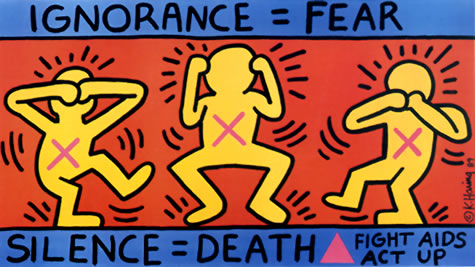
Drawing is an abstract form of communication; it is the communication between our thoughts and our audience. Drawing is a mental walk only a select few are able to take, but many are able to understand the steps taken. Maybe it’s because of genes that some people can speak the language of drawing better than others. Maybe it’s because of constant practice that the language of drawing will come easier to some. “A picture’s worth a thousand words” means a drawing is able to communicate so much more than what is intended: it can bring certain emotions to life, represent an important message or theme, or document the cultures and beliefs of a certain time period. Without drawing, thousands of voices would be put to rest.


This is a great gerund and i thoroughly enjoyed reading and learning about deawing!Your quote about the shaman is very interesting! Also, your descriptions of your personal experiences with drawing, as I'm sure are in abundance, add a splendid element to your ideas about doodling. It was also very fascinating to see a piece of your very own drawings! Lastly, I think your concluding sentence is particularly effective, and true! Great job Emma!
ReplyDelete-Emily :)
That was an interesting idea, to use so many facts/quotes concerning something that is so ethereal and imaginative.
ReplyDeleteAnd of course, it always helps to tie in the idea of the original walk into the essay..;)
I love the images you used. Haring was a good point to make, considering he was one of the 'good' graffiti artists.
Laura
Emma,
ReplyDeleteWhat a riot of information and reflection! You note that drawing is a "mental walk," a "language itself." These are wonderful insights, so aptly phrased. The inclusion of the family doodles was an inspired addition to this piece. Well done, all of it!
--MG